


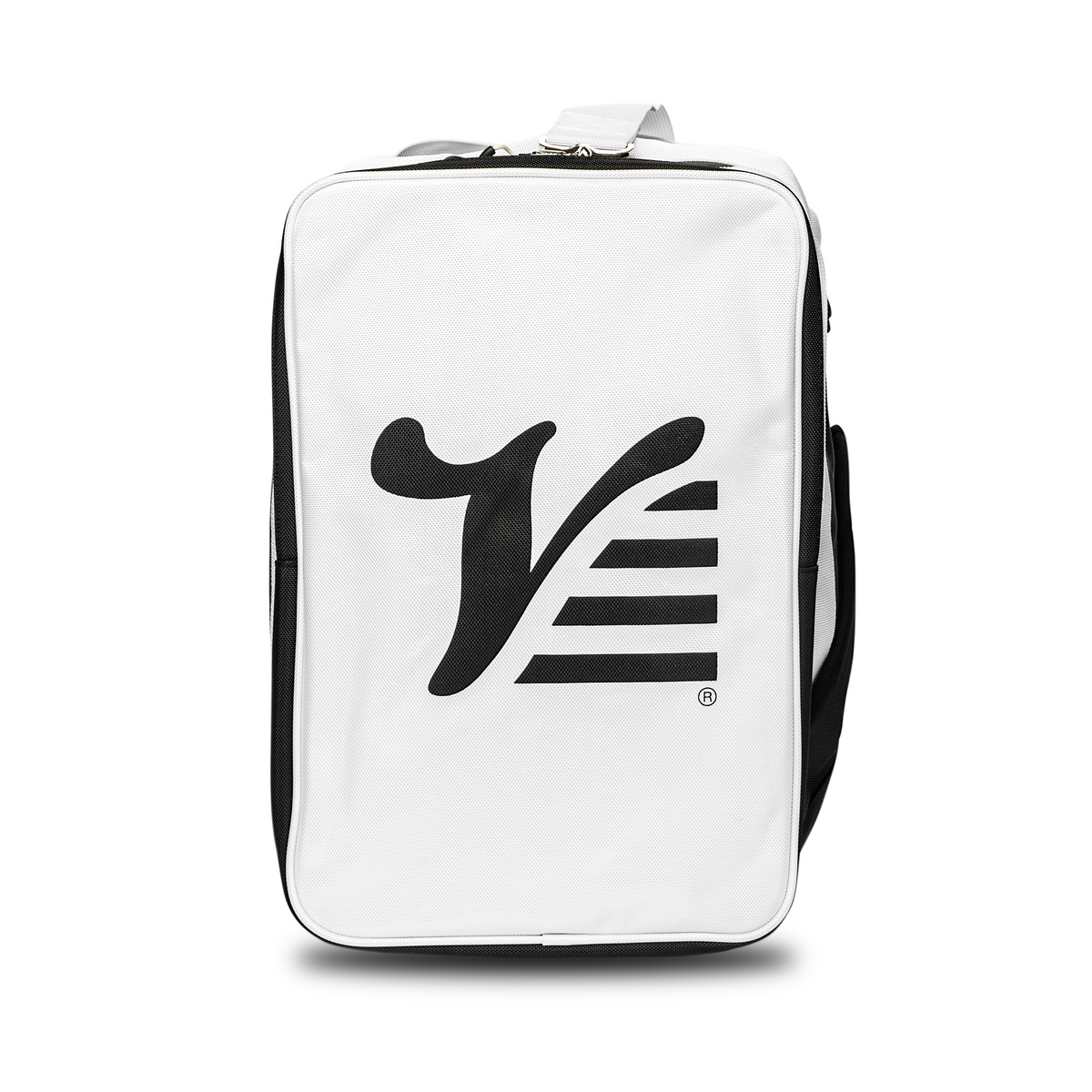
Valle Eagle Ball Bag
The Valle Eagle Ball Bag is a coaches bag with one job: move a lot of baseballs. It holds more than 110 balls in a 12 by 12 by 18 inch body built from 1680 denier fabric with YKK zippers, carries a fungo bat in an outside sleeve, and keeps a scorebook and pens in a separate end cap pocket. Valle builds it for baseball and softball coaches alike.
More Than 110 Baseballs on One Shoulder
A hundred and ten baseballs adds up to roughly 35 pounds before the bag itself, which is why the construction is the story here. The fabric is 1680 denier, the heaviest in Valle's range, the zippers are YKK, and the strap is double stitched under a heavy duty shoulder pad. A ball bag is the most abused bag a program owns, dragged to the mound, dropped at the fence, packed wet, and thin fabric is why most of them last a season.
Nobody has to fill it. Load fifty balls and there is room for gloves and smalls on top, which is how most coaches actually pack it. Load it full and it still closes, zips smoothly and carries on the pad, which is the whole test that actually matters at a field.
One Bag, Three Kinds of Baseballs
Most programs run more than one ball: game baseballs that stay clean, practice balls that do the daily work, and training balls for machine or drill sessions. The useful trick with a bag this size is to keep them separated inside it rather than owning three containers. Mesh or drawstring ball sacks dropped into the main compartment turn it into a sorted system, game balls in one, practice in another, and the coach reaching in mid-session grabs the right kind without looking.
It is also the honest answer to the batting cage problem. A cage session eats a hundred balls an hour between rounds and pickups, and hauling that count in anything smaller means two trips or a spilled bucket. One shoulder, one zipper, everything home again at the end, including the fungo riding in its own sleeve on the outside where it cannot bruise a ball bag full of seams.
The Fungo Sleeve
The outside shell carries a sleeve sized for a fungo bat, which puts the two tools of a fielding session in one hand. If you are building that kit from scratch, the Valle Eagle Fungo Bat is the natural partner, and a case of Valle small training balls rides inside as easily as game balls do. The sleeve earns its keep at the field too: the fungo is the first thing in hand when the bag comes off your shoulder at the mound, not the thing buried under 35 pounds of baseballs.
Who This Ball Bag Is For
Baseball and softball coaches first, at every level from youth practice to college programs. It also earns a place with training facilities and with parents running regular cage sessions, because hauling balls in buckets means carrying two hands full and losing the lid, and hauling them in a duffle means loose balls under everything else.
It shares the Eagle range's four colorways, Black, Royal, Navy and Red with white accents, so it can match a program's Players Duffles and Catchers Duffle.
Valle Eagle Ball Bag Specifications
- Size: 12 x 12 x 18 inches
- Capacity: more than 110 baseballs
- Material: 1680 denier fabric
- Zippers: YKK
- Straps: adjustable, double stitched, with a heavy duty shoulder pad
- Storage: main compartment, end cap pocket for scorebook and pens, outside fungo bat sleeve
- Colors: Black, Royal, Navy, Red, each with white accents
- Sport: baseball and softball
Frequently Asked Questions
Does it really hold 110 baseballs?
More than 110 is Valle's own figure, and the 12 by 12 by 18 inch body supports it. A full load is heavy, which is what the padded strap and 1680 denier fabric are for.
Will softballs fit?
Yes, fewer of them by volume, and Valle builds the bag for both games.
What fits in the outside sleeve?
A fungo bat, which is the tool most coaches carry with the balls. A standard bat fits the same sleeve.
Is it better than a bucket?
It carries three buckets worth on one shoulder, closes with a zipper instead of a lid, and stows flat when empty. Buckets still win as a seat, which is why most coaches end up with the bag doing the hauling and one bucket riding along for the bullpen.
Can wet baseballs go in it?
They can ride home in it, but unzip it and spread them when you get there. Wet baseballs stored sealed go soft, and that is the balls' fault, not the bag's; the 1680 denier fabric itself handles a wet field day without trouble.
Can it be a regular equipment bag?
It can, though the shape is optimized for bulk rather than gear. A player is better matched to the Players Duffle.
