

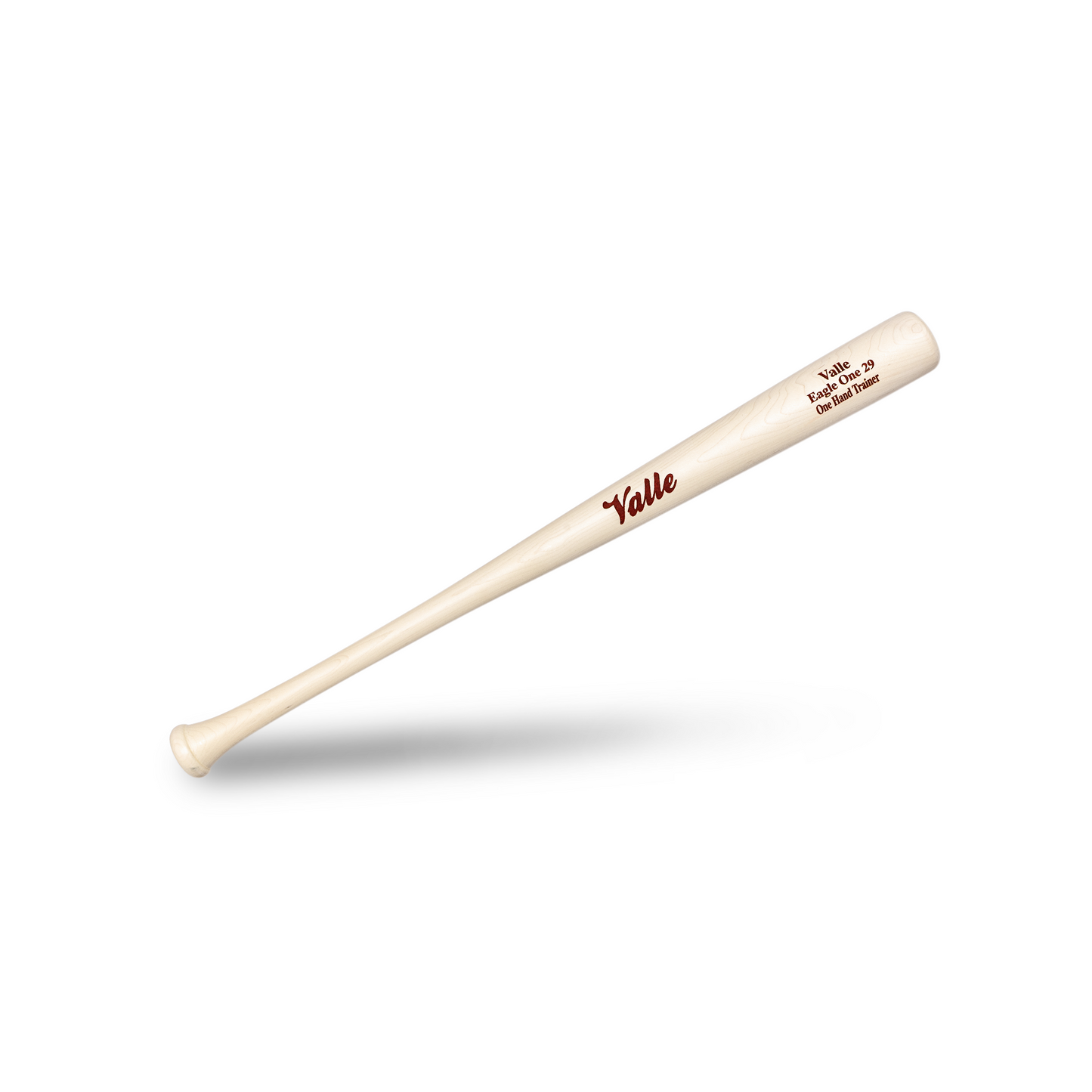
Valle Eagle One Hand Training Bat
The Valle Eagle One Hand Training Bat is a short maple trainer, made in five lengths from 25 to 29 inches, for the oldest and most useful drill in hitting: swinging with one hand at a time. It carries the Valle Eagle One stamp with the length on the barrel, a slightly flared knob, and the same balanced feel as the rest of the Eagle line. The point of a one hand bat is not strength. It is that a hitter cannot hide a bad path when only one hand is on the bat.
What One Hand Swings Actually Fix
A baseball swing is two hands doing different jobs. The bottom hand pulls the knob and sets direction; the top hand delivers the barrel through the ball and controls the face at contact. When both are on the bat, a strong hand covers for a weak one, and a hitter can produce a decent looking swing with mechanics that fall apart against better pitching. Take one hand off and the compensation disappears immediately.
That is the whole idea behind this bat: isolate each hand, and make it obvious how the top and bottom hand are supposed to work together to bring the barrel to the proper path and position for solid, consistent contact. A hitter who casts the barrel with the top hand finds out in about four swings. So does a hitter whose bottom hand pulls off the ball early. The feedback is honest in a way that a two hand swing off a tee is not.
Choosing a Length from 25 to 29 Inches
Choose by the hitter's size, not by the length of their game bat. A one hand bat should be short enough to control with a single hand through the whole swing, which for most youth hitters means 25 to 27 inches, and for high school and adult hitters 28 or 29. If a hitter cannot keep the barrel from dropping through the zone with one hand, the bat is too long for them, not the other way round.
Programs buying for a team tend to keep two or three lengths in the bag rather than one. The bat is short and light enough that the difference between 26 and 28 inches is genuinely felt, and a hitter who is fighting the tool is not learning anything from it.
Maple Build and the Flared Knob
The bat is turned from high quality maple and is extremely balanced, which matters more on a one hand trainer than on almost any other bat. A one hand swing is a test of barrel control, so a trainer with weight hanging out at the end teaches a hitter to fight the bat rather than to move it correctly. This one is built to be moved.
The slightly flared knob does real work here too. With one hand on the bat, the hand takes all of the load, and a flat knob is what makes a hitter squeeze. The flare gives the hand something to sit against so the grip can stay relaxed, which is the point of the drill; a tight grip is exactly the thing that stops the barrel working.
Who This Training Bat Is For
Hitters from roughly ten years old through professional use one hand bats, and the drill scales the whole way up. It suits a baseball player working on bat path with an instructor, a high school hitter trying to stop casting, and a team running stations in a cage. It is equally at home in a garage with a tee and a net, which is where most of the repetitions in a season actually happen.
It is not a strength tool and not a weighted bat. If you want to add load to a swing that is already sound, that is a different piece of equipment. This one exists to expose and fix the path.
How to Use the Valle Eagle One Hand Training Bat
Start on a tee, with the ball out in front, and go bottom hand first. Choke up, keep the elbow soft rather than locked, and take short controlled swings at maybe half effort; the goal is contact on the sweet spot, not distance. Ten to fifteen swings is plenty before switching. Then go top hand, which is where most hitters find their problem, and expect it to feel worse before it feels better.
Move from the tee to soft toss once both hands can find the baseball consistently, then to short front toss if you have a partner and a net that will take it. Finish the round with ten normal two hand swings so the feel carries into the real thing. That last part is what makes the drill stick; work done one handed and never reattached to a full swing tends to stay in the cage.
Keep the volume sensible. One hand work is fatiguing on the forearm and the hand, and a tired hitter grooves a bad pattern. Two or three sets of ten to fifteen per hand, a few times a week, does more than a hundred swings once.
Caring for a Maple Trainer
Treat it like a wood bat, because it is one. Use it on a tee and in soft toss, not against live pitching, and not against machine work at speed. Keep it out of hot cars and away from standing water, wipe it down after damp sessions, and store it flat or standing rather than leaning. Rotating the label away from the ball on contact is a habit worth keeping with any maple bat.
Expect ball marks on the barrel quickly. Marks are cosmetic; the things that end a wood trainer are contact off the end and moisture, and both are within your control.
Valle Eagle One Hand Training Bat Specifications
- Type: one handed training bat for baseball hitters
- Model: Valle Eagle One, stamped with the length
- Lengths: 25 inch, 26 inch, 27 inch, 28 inch, 29 inch
- Material: maple
- Knob: slightly flared
- Profile: balanced, short and light for single hand control
- Intended use: tee and soft toss one hand drills, not live pitching
What Is Included
One training bat in the length selected. Bats ship individually, so a program keeping several lengths in the bag orders each one separately.
Frequently Asked Questions
Which hand should I train first?
Bottom hand first. It sets direction and it is the easier of the two to control, so it gives the hitter a reference point before the top hand exposes the harder problem.
What length for a twelve year old?
Usually 26 or 27 inches. The test is simple: if the hitter can hold the barrel up through the whole swing with one hand, the length is right. If the barrel drops, go shorter.
Can I use it against a pitching machine?
No. Keep it to a tee and soft toss. It is a short wood trainer, and machine speed against one hand is how bats break and hands get hurt.
Is this a weighted bat?
No. It is a light, balanced maple bat. The training effect comes from removing a hand, not from adding load.
How often should a hitter use it?
Two or three short sets per hand, a few times a week, is more useful than long sessions. One hand work fatigues the forearm quickly and a tired hitter reinforces the habit you are trying to remove.
What pairs with it?
The Valle Eagle Fungo Bat for the coach running the same practice, and the Valle training gloves if you want the fielding side held to the same standard.
