


Perfect Swings USA Hit Stick Utility Swing Trainer
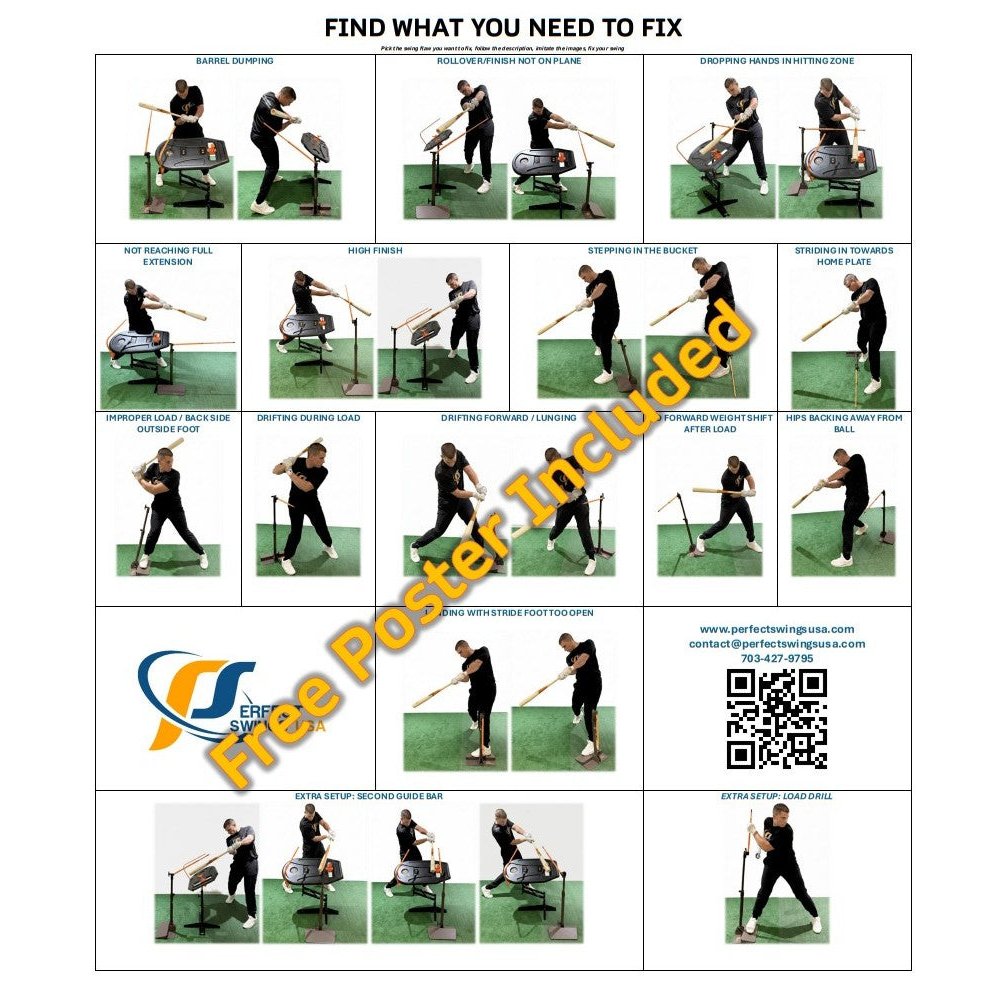
The Perfect Swings USA Hit Stick is a utility swing trainer for baseball hitters that turns one adjustable folding stick into a whole toolbox of swing fixes. Set the stick at an angle and it becomes a physical constraint: the only way to swing without hitting it is to swing correctly. Coaches call this constraint-based training, and it is one of the fastest ways to change a movement pattern, because the hitter gets instant physical feedback instead of verbal cues. A free instruction poster with setup diagrams is included, showing exactly how to position the stick for each swing problem.
One Trainer, Many Swing Fixes
The Hit Stick's folding design adjusts to any angle, and each setup targets a different fault. Positioned behind the hitter, it checks an improper load or a drifting stride. Set alongside the plate line, it stops a hitter from stepping in the bucket. Angled across the swing plane, it catches dropped hands, barrel dumping, and rollover through contact. Placed ahead of the hitter, it stops lunging at the ball. The included poster maps each of these setups with diagrams, so a parent or coach can build the right station in under a minute.
Why Constraint Training Works
Telling a hitter to stop dropping their hands rarely fixes anything, because the swing happens faster than conscious thought. A constraint changes that: the hitter feels the mistake the moment it happens, the brain adjusts, and within a handful of reps the body finds the clean movement on its own. The Hit Stick creates that environment for almost any hitting fault, which is why one stick can replace a shelf of single-purpose baseball training aids. It works for self-directed practice too - a player training alone gets the same correction a private lesson would deliver.
For hitters specifically fighting swing plane problems, the Hit Stick pairs naturally with the Swing Path Trainer: use the stick to clean up the load and hand path, then confirm the full swing on the path trainer.
Training Applications
The Hit Stick earns its keep as a season-long practice fixture, not a one-time fix. In the preseason, use it diagnostically: run through the poster setups and find which constraints the hitter clips, then spend the off-season weeks drilling those. During the season, it becomes a maintenance tool - a few constrained dry swings before batting practice keep a corrected fault from creeping back under game pressure. For team practices, set one Hit Stick station per common fault and rotate hitters through the ones they need. Because it folds flat, it travels in an equipment bag to away games and tournaments, so the routine does not stop when the team leaves home.
A simple weekly pattern for an individual baseball player: two sessions of ten constrained dry swings per target fault, followed by ten tee swings without the stick to test whether the clean movement holds. When the tee swings stay clean for a full week, move the constraint to the next fault on the list.
What's Included
- Hit Stick adjustable folding utility trainer
- Free instruction poster with swing-fix setup diagrams
Bat, balls, and tee are not included.
Who the Hit Stick Is For
Baseball players from youth leagues through high school and beyond, their parents, and coaches who want one adjustable station instead of a bag of specialized gadgets. Because setup changes in seconds, a team can run it as a rotating practice station, changing the constraint for each hitter's specific fault.
Hit Stick Specifications
- Folding stick design adjusts to any angle
- Constraint-based setups for improper load, lunging, dropped hands, stepping in the bucket, barrel dumping, and rollover
- Free instruction poster with setup diagrams included
- Works for right-handed and left-handed hitters
- Suitable for tee work, soft toss, and dry swing stations
- One year manufacturer warranty on swing training products
Frequently Asked Questions
How do I know which setup to use?
Start with the fault you see most: weak ground balls usually trace to rollover or dropped hands, swings and misses at good pitches to lunging or a long path. The included poster shows the stick position for each fault, and working one fault at a time gets the fastest results.
Can it be used indoors?
Yes. The Hit Stick works anywhere a hitter can take dry swings or tee reps, so garages, basements, and indoor cages are all fair game in the off-season.
Does it take hits like a tee, or does the hitter avoid it?
Both, depending on the setup. In most positions the stick is a boundary the hitter learns to swing around, and contact with it is the feedback that the swing broke down.
Is it only for baseball?
The setups shown on the poster are built around baseball swings. Softball hitters work on many of the same faults, but the product's documented use is baseball training.