
Heater Sports
Heater BaseHit Real Baseball Pitching Machine with Auto Ball Feeder
- SKU:
- T04-BH199
- UPC:
- 638280070774
- MPN:
- BH199
- Shipping:
- Free Shipping
- shipping_label:
- free






Description
The Heater BaseHit is a compact, real-baseball pitching machine built for solo batting practice at home, in the backyard, or at a local field. It throws regulation baseballs up to 45 MPH and lite-baseballs up to 60 MPH, with an adjustable pitch height that lets the same machine deliver fastballs, pop flies, and ground balls. For families with a youth baseball player who is ready to move past tee work and parent-pitched soft toss, the BaseHit bridges the gap between coach pitch and a full-size commercial pitching machine without the price tag of a training facility unit.
How the Heater BaseHit Builds Better Hitters
Quality repetitions are what separate a player who shows up to games cold from one whose swing is grooved. The BaseHit delivers those repetitions on demand. A 12-ball automatic feeder drops a baseball every ten seconds into the machine, which means a hitter can take a full round of swings without needing someone to toss balls or reset the machine between pitches. Over the course of a single practice session, that translates to hundreds of usable cuts rather than the 40 or 50 a parent or sibling could realistically hand-feed before their arm wore out.
The machine uses a single six-inch wheel paired with a fast-spinning, dual-bearing electric motor. That compact wheel cushions the baseball as it leaves the housing, which keeps pitches consistent from swing to swing. Consistency matters more than raw velocity for most hitters working on mechanics, because the batter's eye calibrates to a predictable release and timing pattern. When the pitch arrives in the same spot, at the same speed, every time, the hitter can isolate what they are working on rather than re-adjusting for a wobbly machine.
Variable Speed Control for Every Level
BaseHit's variable speed dial lets users set pitch velocity anywhere from slow, beginner-friendly pitches up to the top-end 45 MPH with real baseballs or 60 MPH with lite-baseballs. That range covers a lot of developmental ground. A seven or eight year old just getting comfortable tracking a moving ball can start at the low end. A middle schooler working on inside-out hands or letting the ball travel deeper can crank it up. And because pitch speed scales with distance, a player can pull the machine closer to simulate a faster perceived pitch or move it back to give themselves more reaction time.
The lite-ball option is worth understanding. Lite-baseballs are foam or plastic training balls that weigh roughly a third of a regulation ball. When the machine hits them at 60 MPH, the perceived pitch speed at the plate is meaningfully different from a real baseball at the same velocity because lite-balls decelerate faster through the air. Many coaches use lite-balls for indoor work or in tight spaces where a real baseball would cause property damage, and the BaseHit handles both ball types from the same machine with a speed adjustment.
Adjustable Pitch Height for Hitting and Fielding Drills
A pitch height knob on the housing lets you angle the throwing mechanism up or down. Pointed level, the BaseHit throws fastballs across a typical strike zone. Angled up, it delivers pop flies for outfield practice. Angled down, it rolls out ground balls for infield work. That versatility matters for families that use the machine with more than one player or for practices that combine hitting and fielding drills in the same session. A baseball coach running a small clinic can set up stations: one kid hitting off the machine at the normal angle, two kids fielding grounders or pop flies from the same unit after a quick knob adjustment.
Built for Backyards, Not Just Facilities
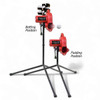
The BaseHit is designed around a tubular steel tripod stand that snaps together with three pushpin legs. No tools are required. Pull it out of the box, extend the legs, lock them in place, attach the composite pitching housing with two quick-attach knobs, connect the ball feeder, and plug it in. Most first-time users are set up and pitching within ten to fifteen minutes. When practice wraps, the machine breaks down just as quickly and stores flat in a garage, shed, or trunk.
The pitching housing itself is high-impact composite plastic, which keeps the total machine weight at roughly 20 pounds. That is light enough for one person, including a teenager, to carry from a garage to a backyard setup spot without help. The fully enclosed wheel is a meaningful safety feature on a machine used by kids. Open-wheel machines can be intimidating or genuinely dangerous if a ball jams or a hand gets too close. BaseHit's housing surrounds the wheel on all sides, and a built-in safety breaker protects the electrical components from overload.
Power Options That Keep You Training
The BaseHit plugs into any standard 110V A/C outlet using the included power cord. For most backyard setups that means running an extension cord from the house or garage. If you want to train away from power, Heater Sports sells an optional portable power station that powers the machine for hours on a single charge. That opens up practice at fields, parks, or tournament warm-up areas where outlets are not available. The power pack is sold separately and is worth considering if you plan to haul the machine to team practices or baseball clinics.
Who the Heater BaseHit Is For
The BaseHit makes sense for a specific audience. It fits baseball players between roughly five years old and adult recreational players who want efficient solo practice at home. That covers t-ball graduates starting to track moving pitches, coach pitch leaguers transitioning to machine pitch, Little Leaguers in the 8U to 12U range working on swing mechanics, and high school players looking for an at-home option for off-season reps. The top-end 45 MPH speed is below what most high school varsity pitchers throw, so a 16 year old will use this machine for timing work rather than facing game-speed heat. Parents of younger players often find the BaseHit covers multiple seasons as their child develops. The adjustable speed means the same machine that tossed slow pitches to a six year old still challenges them at ten or twelve.
The BaseHit also works for baseball coaches running small-group practices, travel teams looking for a backup machine, and youth baseball academies that need a durable, easy-to-move unit for introductory hitting stations. Where it does not fit is serious high school or college programs that need to train against mid-80s fastballs, sharp curveballs, or precise location work. Those programs should look at the Heater Pro line or heavier commercial machines.
Training Drills for the BaseHit
A machine is only as useful as the drills you run with it. A few that work especially well with the BaseHit:
Standard BP sessions. Set the machine at a comfortable starting speed, set the height for a normal fastball, and take three rounds of ten swings each. Work specific zones on each round: round one inside, round two middle, round three outside. The consistency of the machine lets the hitter focus purely on swing path.
Two-strike hitting. Raise the speed toward the top end, shorten the stride, and focus on putting the ball in play rather than driving it. This drill uses the BaseHit's top speed productively even for younger hitters because the goal is contact, not power.
Ground ball and pop fly rotations. Set up two or three infielders at normal defensive distance, tilt the machine down for grounders, and run a set. Reset the height knob for pop flies and move the fielders to shallow outfield positions. This is where the adjustable height pays off compared to a fixed-angle machine.
Situational hitting. Call a situation before each pitch (runner on second, two outs; bases loaded, one out) and have the hitter execute accordingly. The BaseHit's predictable delivery keeps the focus on the situation rather than the pitch.
Using the BaseHit With a Batting Cage
The BaseHit has a built-in harness that attaches to Heater Sports home batting cages, including the Power Alley 22-foot cage and the Xtender 24-foot cage. The harness secures the back of the machine to a fixed point on the cage frame, which keeps it from shifting during use and guarantees the baseballs feed through the hitting tunnel rather than off to the side. If you already own one of those cages, or are considering a combo setup, the integration is seamless. For users without a cage, a 10 by 10 foot open area with a backstop or sturdy net behind the hitter works fine in a backyard. Just account for the ball flight: a hard-hit line drive off the top-end speed will travel.
Lite Baseball Safety Note
Heater Sports issues a specific usage note on lite-baseballs with the BaseHit: lite-baseballs are intended for ground ball drills only, not for pop flies or fly ball practice. Lite-balls do not handle the trajectory from an angled-up machine well and can lead to inconsistent pitching or machine wear. Stick to real baseballs for pop fly drills and reserve lite-baseballs for grounder work and general hitting where ground-level pitch trajectory is the goal.
Heater BaseHit Specifications
- Model: BH199 (includes 12-ball automatic feeder)
- Pitch speed with real baseballs: up to 45 MPH
- Pitch speed with lite-baseballs: up to 60 MPH
- Ball compatibility: regulation baseballs and lite-baseballs
- Pitch types: fastballs, pop flies, ground balls (adjustable height)
- Ball feeder: 12-ball automatic feeder, pitches every 10 seconds
- Wheel: 6-inch enclosed wheel with dual-bearing electric motor
- Frame: tubular steel tripod stand with pushpin legs
- Housing: high-impact composite with built-in safety breaker
- Power: standard 110V A/C or optional portable power station (sold separately)
- Weight: 20 pounds
- Packed dimensions: 14 x 12.5 x 18.75 inches
- Recommended ages: 5 years to adult
- Batting cage compatibility: built-in harness for Heater Sports Power Alley and Xtender cages
What's Included
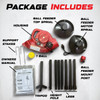
Every BaseHit ships with the pitching machine housing, the automatic 12-ball feeder, one polyurethane pitching machine baseball for accuracy testing on first use, the tubular steel tripod stand with three pushpin legs, the A/C power cord, and a printed setup and safety manual. A full supply of pitching machine baseballs is sold separately. Heater Sports offers both polyurethane machine balls and leather-covered machine balls, and either work well. The portable power station and batting cages referenced above are also sold separately.
Frequently Asked Questions
Can the BaseHit throw curveballs?
No. The BaseHit uses a single-wheel design, which is optimal for consistent fastballs but does not have the dual-wheel mechanism required to put true rotation on a curveball. If you want a machine that throws curveballs, look at the Heater Crusher Curve (mini lite-balls) or the Heater Pro Curve (real baseballs).
What is the difference between the BaseHit and the Heater Jr.?
Both machines are single-wheel, real-ball machines from Heater Sports. The Heater Jr. runs at higher top speeds and is built for older players ready for mid-40 to high-50 MPH pitching, while the BaseHit caps at 45 MPH and is sized for a broader youth age range starting at five. The BaseHit is the lighter, more portable option; the Heater Jr. is the step-up machine.
How much room do I need to set it up?
A pitching distance of roughly 25 to 40 feet from machine to hitter is typical, plus space behind the hitter for a net or backstop and overhead clearance if you are hitting line drives. A 10 foot by 50 foot run in a backyard accommodates most family setups. Indoor use works in a gym or large basement, but expect the machine to pitch at its lower speed range in tighter quarters for safety.
Does it work with any baseball, or do I need specific pitching machine balls?
The BaseHit is designed for pitching machine baseballs rather than game-use regulation balls. Standard leather game balls can be used but will wear down faster and can scuff the wheel. Heater's polyurethane machine baseballs last significantly longer and are the recommended ball for the BaseHit. Lite-baseballs also work and are the safer choice for tight indoor or garage setups.
How long does the auto-feeder take to cycle 12 balls?
At the standard ten-second pitch interval, a full 12-ball feeder empties in roughly two minutes. Most users keep a bucket of additional baseballs near the feeder and refill it between at-bats or hitting rounds.
Is assembly difficult?
No. Assembly is quick and tool-free. The three legs snap into the tripod with pushpins, the pitching housing mounts with two quick-attach knobs, and the ball feeder clips on top. First-time setup takes ten to fifteen minutes including reading the manual. Subsequent setups take two or three minutes.

